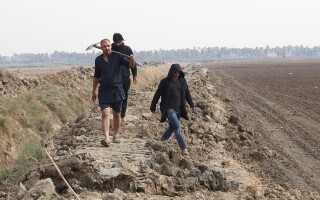
Iraqi wheat farmer Mann al-Fitlawi has long relied on the waters of the nearby Euphrates River to irrigate his farmland near the city of Najaf. But this year, those waters that made the Fertile Crescent the cradle of civilization 10,000 years ago have dried up, leaving him with limited options. Al-Fitlawi, standing next to an irrigation canal near his dry fields, waiting for his share of water, said: "Drilling wells in our agricultural land is futile because the water is saline and unfit for agriculture, so we primarily rely on river water." Iraq, historically one of the largest wheat importers in the Middle East, has sought to enhance food security by achieving self-sufficiency in wheat production, succeeding in registering surpluses of this staple crop for three consecutive years. However, these gains are now threatened, as the driest year in modern history and a drop in water levels to record lows in the Tigris and Euphrates rivers have led to a retreat in agriculture, which could cut the crop by up to 50% this season. In turn, Salah al-Haj Hassan, the representative of the United Nations Food and Agriculture Organization (FAO) in Iraq, stated: "Iraq is facing one of the most severe drought waves in decades." This crisis reveals the fragility of Iraq's situation, a country that is mostly desert, ranking fifth globally in terms of climate change risk in a UN environmental report. The International Energy Agency reports that the average temperature has been rising by about half a degree Celsius every 10 years since 2000, and the increase could reach 5.6 degrees by the end of the century compared to pre-industrial levels, with a decrease in rainfall expected. But Iraq also depends on its neighbors for 70% of its water supply, with Turkey and Iran using dams on river sources to secure a larger share of the region's shared resources. According to the FAO, the reduction in water flowing into Iraq is the biggest factor behind the current crisis, prompting Baghdad to implement water rationing. Al-Haj Hassan reported that Iraq's water reserves have decreased from 60 billion cubic meters in 2020 to less than four billion today. He added: "Rain-fed and irrigated agriculture are directly affected across the country." To end the country's dependence on imports, the Iraqi government has, in recent years, financed the purchase of high-yield seeds and other supplies, encouraged modern irrigation and desert farming techniques to expand agricultural land, and supported grain purchases by offering farmers prices double the global wheat price. Despite the high cost, this plan raised strategic wheat reserves to over six million tons in some seasons, exceeding Iraq's storage capacity. Last September, the government, which bought about 5.1 million tons of the 2025 crop, said these reserves were sufficient to meet local needs for a full year. However, others, including water expert and founder of the Iraq Climate Change Center, Harry Stephanian, expect imports to rise again, exposing the country to a greater risk of rising food prices and their negative repercussions on trade and government budgets. Stephanian said: "The water and food security crisis in Iraq is no longer just an environmental problem; it has immediate economic and security implications."